
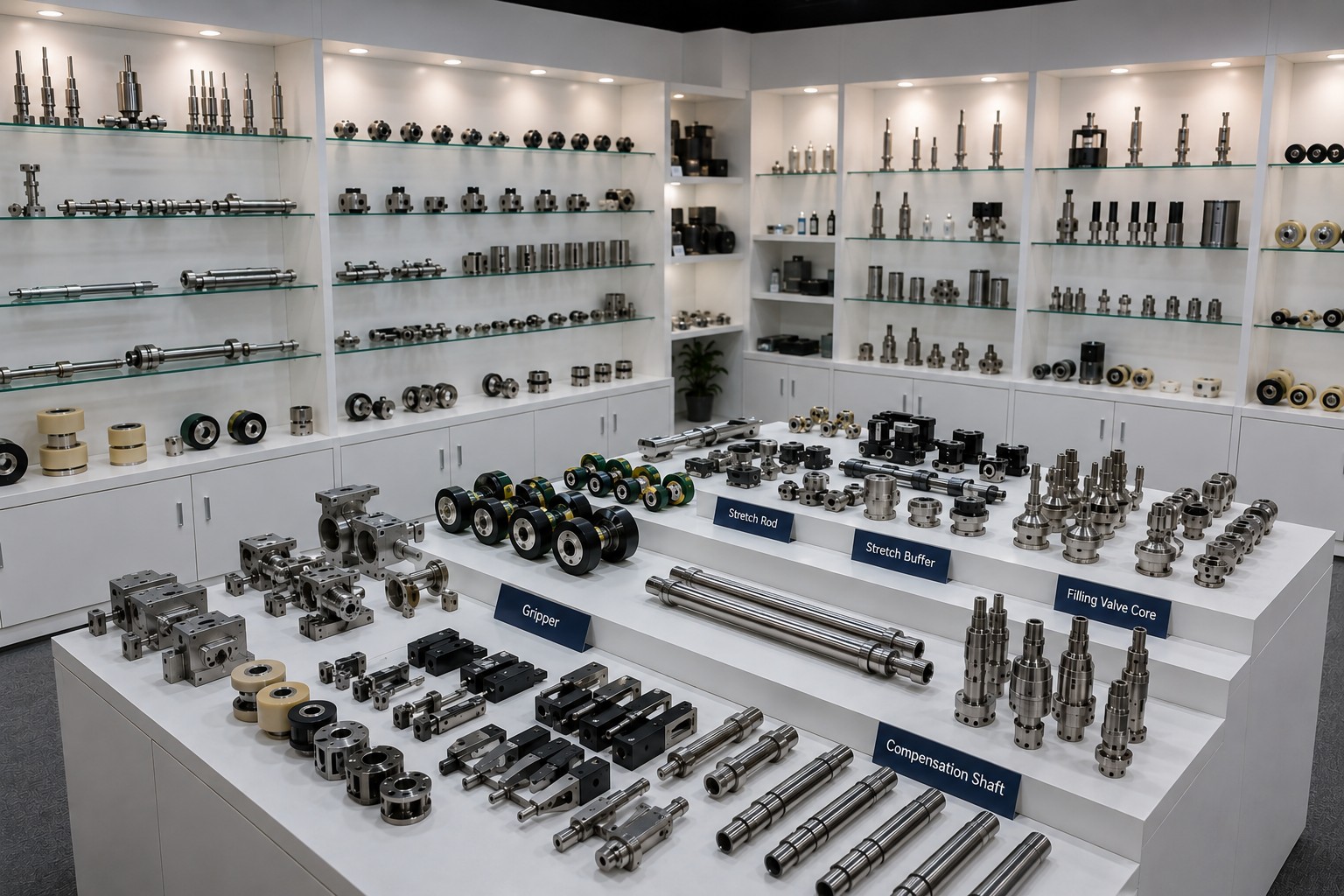
For a compatible spare parts RFQ, start with the exact item you need, the machine or station where it is used, and the best evidence available. A part code, drawing, sample or clear photo can each be helpful; taken together, they make the request easier to review and clarify.
What is the minimum record for a compatible spare parts RFQ?
Begin with a concise identification record rather than a general request such as “need a replacement.” Include the requested quantity, the part name used at your site if known, and the equipment context. For Krones- or SIDEL-related packaging equipment, identify the brand only as reference information and retain the machine details available at your plant.
- Requested quantity and the site’s own part description or reference
- Available part code, drawing number or purchase reference
- Machine, station or functional location where the component is installed
- Any available dimensions, material information or operating-environment notes
- Clear photos, a drawing or a sample when sharing is feasible
Which part-identification details reduce avoidable clarification?
Part identifiers are most useful when they are linked to context. Keep the exact characters of an available code, including revisions, and state where that code came from—for example, a site record, a marking, a drawing or an old purchase document. If an identifier is uncertain, label it as uncertain instead of presenting it as confirmed.
For a missing part code, a simple record can still be useful: a photo of the installed position, a separate photo of the removed component if safe to obtain, a reference scale, and a note about mating features or adjacent components. These are review inputs, not proof that a proposed replacement will fit or perform correctly.
How should a drawing, photo or sample be prepared for review?
Use the clearest available source and keep it traceable to the item being requested. A drawing can show version details that a photo does not; a photo can show installed orientation that a drawing does not; a sample can assist dimensional or material review when it is available. State the source and date of each item so the buyer and supplier can distinguish current information from older records.
- For drawings: include revision status, units and any applicable tolerance information.
- For photos: show the overall component, close-up features and the installed location where appropriate.
- For samples: identify whether the sample is used, damaged or modified, and protect it appropriately for transport.
- For measurements: record the method and units; do not infer unseen dimensions from a photograph.
What machine context belongs in a Krones or SIDEL spare-parts inquiry?
Give only the machine context you can verify internally: the machine family or designation from your records, the relevant station, line position, and the function you believe the component serves. This helps scope the inquiry without representing that a compatible part is interchangeable across every machine or version.
When the part affects machine safety, guarding, pressure, motion, product contact, electrical systems or performance, do not rely on an RFQ response as installation instruction. Escalate the review to qualified personnel and the applicable official manufacturer documentation for the specific equipment.
How can procurement teams structure an RFQ information pack?
A compact information pack makes it easier to keep questions and replies connected to the same item. Use one line or form section per requested component, and attach the supporting files with meaningful filenames. Separate “known,” “to be confirmed” and “not available” fields so that missing information is visible rather than silently assumed.
- Assign an internal request reference and record the buyer’s contact details.
- List the component, quantity and verified machine context.
- Attach the available code, drawing, photo or sample information.
- Flag any unknown dimension, material, revision or application detail for clarification.
- Ask for the documentation and commercial information needed for your own purchasing review.
What should be checked before a purchase decision?
Keep technical identification and commercial review as separate checks. Before ordering, compare the supplier’s response with the evidence provided in the request, ask about any unresolved assumption, and retain the documents that support your internal approval process. Compatibility and suitability must be evaluated for the specific machine and application; they should not be assumed from a brand reference or a similar-looking component.
Frequently asked questions
Is a part code enough for a compatible spare parts RFQ?
A part code can be useful, but add the machine context and any available drawing, photo, dimensions or sample information so the request can be reviewed without assuming compatibility.
What if the original part code is missing?
Share the installed location, overall and close-up photos, measured dimensions where available, relevant context and a sample or drawing when one can be provided for evaluation.
Can a photo alone confirm a replacement part?
No. A photo is one item of evidence and may not show dimensions, revisions, materials or functional requirements. Final review should use the applicable official documentation and qualified personnel.
Prepare a compatible spare parts inquiry
Send the available part code, machine context, drawing, sample information or photos for review and quotation discussion.
Request a QuoteUpload Drawing