
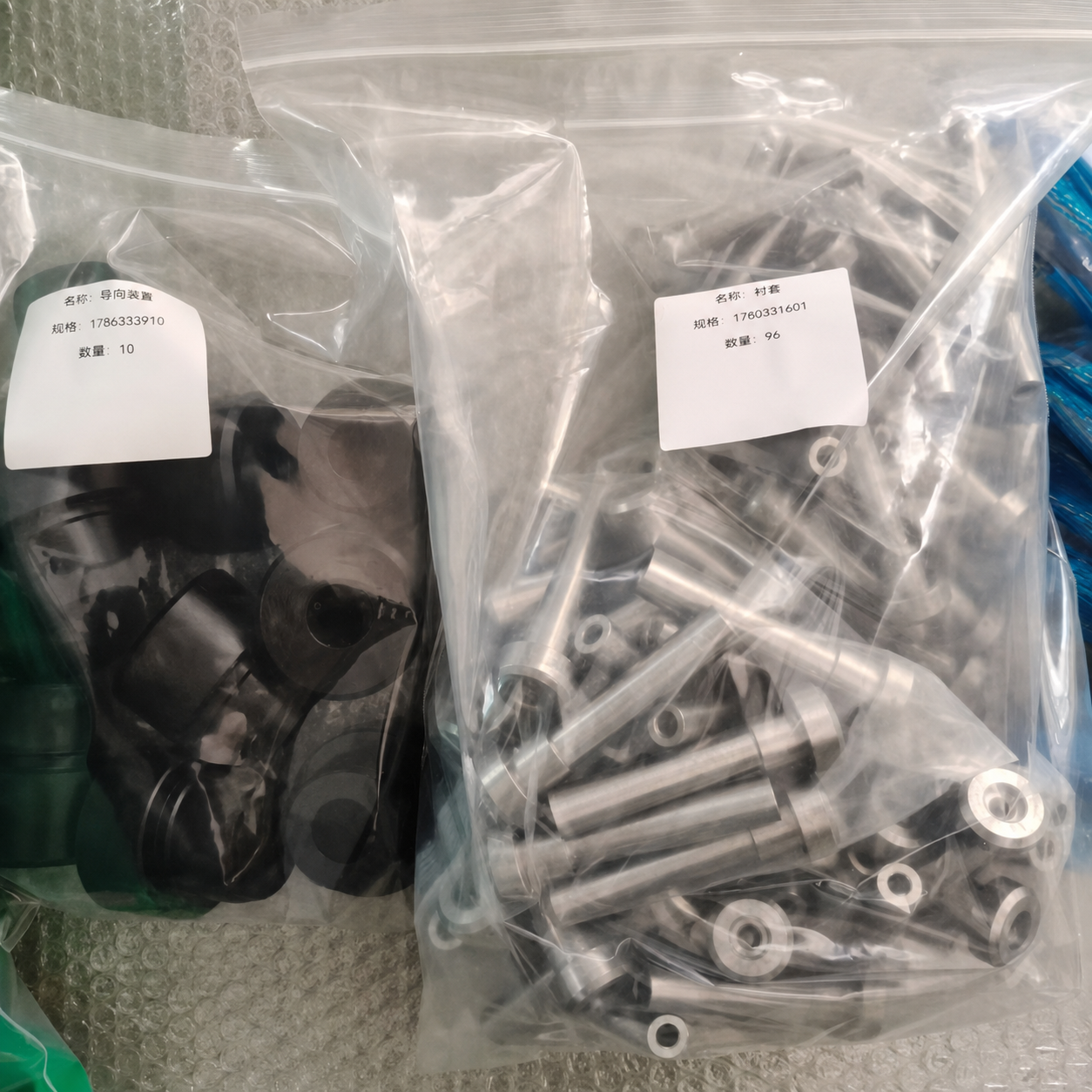
Site-owned component photo used as an example of labelled spare-part storage; the image does not establish a specification or compatibility.
A practical packaging spare-parts history file is a structured record that links an item to the available part identification, its machine location, and the documents or purchase references that may help an RFQ later. It should support identification work—not replace the official manufacturer documentation, a qualified technical review, or site safety procedures.
What is the purpose of a spare-parts history file?
When an item is reordered years later, individual notes, inboxes and unlabeled samples can be difficult to interpret. A consistent record gives maintenance managers, plant engineers and procurement teams one place to find the available evidence. It can make a compatible spare-parts RFQ more specific without implying that a prior order proves current compatibility.
For Krones- or SIDEL-related packaging equipment, retain the brand reference only as identification context. SIYUNDI TECH is an independent supplier of compatible/replacement parts; brand names do not indicate affiliation, authorization or OEM supply.
Which fields should a packaging spare-parts history file include?
Use the fields that are available and relevant to the item. Avoid filling gaps with estimates or assumptions.
- Identification: the available part code, internal stock code, description and clear photos of the part and any non-sensitive marking.
- Machine context: the equipment area, functional station and the machine information already held by the site.
- Physical references: a controlled drawing, dimensions, material information or a retained sample when these can be shared appropriately.
- Purchase history: a previous order reference, purchase date, quantity and supplier reference when permitted by your procurement process.
- Change notes: a brief factual record of revised drawings, superseded internal codes or reasons for a new inquiry. Do not label an item interchangeable unless the applicable review has confirmed it.
How does the record help with a legacy-part RFQ?
For an obsolete or poorly identified component, the best RFQ is usually an evidence pack rather than a one-line name. A supplier can use the available part code, photo, drawing or sample together with the machine and station context to understand what needs evaluation. This is especially useful when an old internal code does not contain enough detail on its own.
Start an inquiry through the RFQ page and provide only the information that you are authorized to share. You can also review the services overview and relevant categories such as blow molding parts, filling machine parts, and conveyor parts.
What should procurement verify before reordering?
Before requesting a quote, check that the record is attached to the correct machine area and that the parts team can identify the actual item being discussed. Separate confirmed source material from assumptions. If a change in process, machine configuration or applicable documentation may matter, flag it for qualified personnel rather than treating an older purchase reference as a technical approval.
For category-level identification context, see SIYUNDI's Krones-compatible parts and SIDEL-compatible parts pages. An inquiry still requires application-specific review.
How often should the record be updated?
Update it when the organization receives a new drawing, a revised internal reference, a clearer photo, or factual purchase information that can improve future identification. A small, maintained file for frequently requested or legacy items is generally more useful than a large register that no one can validate.
Frequently asked questions
Which records are most useful when identifying a legacy packaging spare part?
A part code if available, clear photos, dimensions or a drawing, machine and station context, former supplier reference and previous purchase information can help make an inquiry clearer. The available information still needs application-specific review.
Can a purchase history confirm compatible-part interchangeability?
No. Purchase history is useful identification context, but it does not by itself confirm compatibility or performance.
What should be sent with a compatible spare-parts RFQ?
Include the available part code, photos or drawing, quantity, machine and installation location, plus relevant purchase references where appropriate.
Prepare a clearer spare-parts RFQ
Send the available part code, drawing, photo or sample information with machine context for review.
Request QuoteUpload Drawing